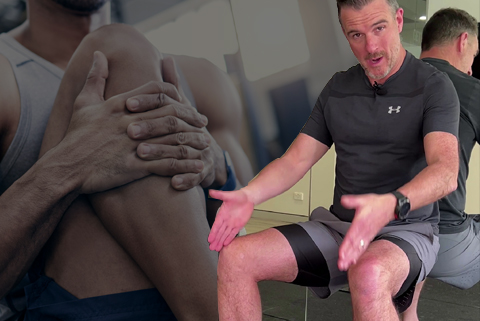
Over 40?
6 Knee-Friendly Exercises to Keep Your Knees Strong
by Tim Keeley12 Aug 2026


As featured in The Daily Telegraph, Herald Sun and other News Corp publications around Australia.
If you are over 40 and getting back into exercise, one of the most common concerns is whether certain exercises are safe for your knees.
The answer is not to stop loading them.
Your knees are designed to bend, straighten and tolerate load. As we get older, however, it is common to lose muscle strength, conditioning and confidence, particularly after a period of inactivity, injury or pain.
When that happens, everyday activities such as stairs, squatting, walking uphill or getting up from a chair can start to feel harder. The solution is usually to gradually rebuild the strength and control of the muscles that support the knee rather than avoiding movement altogether.
The quadriceps at the front of the thigh are especially important because they help straighten the knee and absorb load. The gluteal muscles and hamstrings also contribute by controlling the hip, pelvis and thigh, while good movement through the hip, knee and ankle helps distribute load effectively through the whole leg.
The following six exercises are deliberately entry-level. They are designed for people who are underconditioned, returning from injury, starting exercise again or simply wanting a straightforward home routine that is easy on the knees.
The aim at this stage is not maximum strength. It is to rebuild muscle contraction, movement confidence, knee control and a base level of strength before progressing to harder exercises.
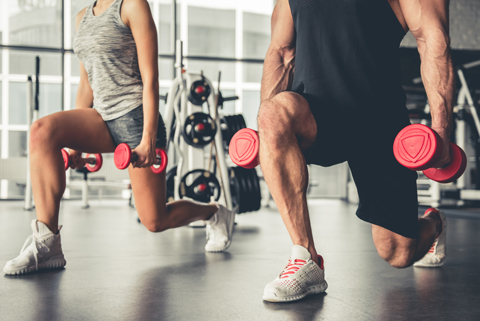
Why Knee Strength Matters More As You Get Older
As we age, muscle mass and strength can gradually decline if they are not maintained through regular exercise. This can affect the ability of the muscles around the knee and hip to control movement and tolerate load.
That does not mean people over 40 should avoid squatting, strengthening or loading their knees. In fact, appropriately progressed strength training is one of the most important things you can do to maintain your ability to walk, climb stairs, exercise and stay active as you get older.
A good starting program should address:
- Progressive quadriceps strengthening
- Glute and hip strengthening
- Hamstring strengthening
- Squat and lunge progressions
- Step-up and step-down exercises
- Single-leg strength and balance
- Progressive resistance training
- Running, jumping and higher-level activity where appropriate
These Exercises Are a Starting Point
These six exercises are intentionally low level. They are most suitable for people who are:
- Getting back into exercise after a long break
- Underconditioned
- Returning after an injury
- Concerned about aggravating their knees
- Looking for simple exercises to perform at home
- Building confidence before returning to the gym
- Wanting to maintain strength as they get older
The goal is to establish good muscle contraction, base strength and movement control. Once these exercises become easy and can be performed comfortably with good technique, they should be progressed.
The long-term aim is not to stay on beginner exercises forever. It is to use them as a foundation for stronger, more functional movements.
Exercise 1: Quadriceps Stretch
What it targets
The quadriceps are the large muscles at the front of your thigh. They help straighten the knee, while one part of the quadriceps, the rectus femoris, also crosses the hip.
If these muscles become stiff after inactivity, sitting, injury or reduced exercise, bending the knee and extending the hip can feel restricted.
This stretch provides a simple way to improve comfortable movement through the front of the thigh before progressing to strengthening work.
|
|
How to perform it
- Start in a half-kneeling position with one knee on a padded surface and the opposite foot in front.
- Keep your trunk upright and gently brace your abdominal muscles.
- Keep your pelvis relatively neutral rather than excessively arching your lower back.
- Gently move your pelvis forwards until you feel a stretch through the front of the thigh and hip of the kneeling leg.
- If comfortable, bend the back knee further to increase the quadriceps stretch.
- Hold the position without bouncing.
- Repeat on the other side.
How much should you do?
Hold for approximately 20–30 seconds and repeat 2–3 times on each side.
What should you feel?
You should feel a comfortable stretch through the front of the thigh and possibly the front of the hip. You should not feel sharp pain in the knee.
Common mistake
Do not force the knee into a large bend if it is uncomfortable. The aim is a gentle stretch through the thigh rather than maximum range.
Exercise 2: Hip Thrust
What it targets
The hip thrust primarily strengthens the gluteus maximus, one of the major muscles responsible for hip extension.
Strong gluteal muscles help control the pelvis and thigh and contribute to activities such as standing up, climbing stairs, squatting and walking uphill.
This version provides a relatively knee-friendly way to begin strengthening the hips without requiring a deep squat position.
|
|
How to perform it
- Position your upper back against a low bench or stable surface.
- Place both feet flat on the floor approximately hip-width apart.
- Bend your knees to a comfortable angle.
- Gently brace your trunk.
- Squeeze your buttocks and drive through your feet to lift your hips.
- Raise your hips until they are in line with your shoulders and knees without excessively arching your lower back.
- Pause briefly at the top.
- Lower slowly and with control.
How much should you do?
Start with 10–12 repetitions for 2–3 sets.
What should you feel?
You should feel the main effort through your buttocks. Some hamstring activity is normal.
Common mistake
Avoid arching the lower back to achieve extra height. Think about squeezing the glutes and lifting the pelvis rather than pushing the ribs upwards.
Exercise 3: Banded Knee Extension
What it targets
This exercise directly targets the quadriceps, the muscles responsible for straightening the knee.
Quadriceps strength is essential for walking, standing up, stair climbing and controlling your body as the knee bends.
For someone returning to exercise, a resistance band provides a simple way to begin loading the quadriceps without requiring heavy weights.
|
|
How to perform it
- Secure a resistance band behind you at approximately knee height.
- Loop the band behind the lower part of one thigh.
- Step backwards until there is gentle tension in the band.
- Begin with the knee slightly bent.
- Keep your foot flat and your body upright.
- Tighten the quadriceps and straighten the knee against the resistance of the band.
- Pause briefly when the leg is straight.
- Slowly allow the knee to bend again.
- Repeat on the other side.
How much should you do?
Perform 10–15 repetitions on each side for 2–3 sets.
What should you feel?
You should feel the quadriceps working through the front of the thigh.
Common mistake
Do not simply rock your whole body backwards and forwards. Try to create the movement at the knee by deliberately tightening the quadriceps.
Exercise 4: Elevated Bridge
What it targets
The elevated bridge strengthens the hamstrings and gluteal muscles while placing relatively little demand on deep knee bending.
The hamstrings cross the back of the knee and hip and contribute to knee control, hip extension and lower-limb strength.
This makes the elevated bridge useful for people wanting to strengthen the back of the legs before progressing to more demanding exercises such as deadlifts.
|
|
How to perform it
- Lie on your back with your heels supported on a bench, box or stable chair.
- Bend your hips and knees to a comfortable position.
- Keep your feet approximately hip-width apart.
- Gently brace your abdominal muscles.
- Press your heels into the support.
- Squeeze your glutes and lift your hips from the floor.
- Continue until your trunk and thighs form a comfortable straight line.
- Pause briefly.
- Lower slowly and with control.
How much should you do?
Perform 8–12 repetitions for 2–3 sets.
What should you feel?
You should feel your hamstrings and buttocks working.
Common mistake
Do not push the hips so high that the lower back arches excessively. If your hamstrings cramp, reduce the height of the bridge or bring your heels slightly closer.
Exercise 5: Wall Sit
What it targets
The wall sit is a simple way to strengthen the quadriceps and gluteal muscles in a weight-bearing position.
Because the position can initially be held still, it allows someone who is deconditioned to develop strength and confidence without repeatedly moving through a large range.
It also begins teaching the knees and hips to tolerate load in a controlled position.
|
|
How to perform it
- Stand with your back against a wall.
- Place your feet slightly forwards and approximately hip-width apart.
- Slide down the wall into a shallow squat.
- Keep your knees pointing in the same direction as your feet.
- Keep your weight evenly distributed through both legs.
- Hold the position while breathing normally.
- Slide back up the wall to finish.
You do not need to squat deeply. Begin at a knee angle that feels comfortable and controlled.
How much should you do?
Start with a 10–30 second hold and repeat 2–3 times.
As your strength improves, gradually increase the hold time or move slightly deeper.
What should you feel?
You should feel the quadriceps working at the front of the thighs and some muscular effort through the gluteal muscles.
Common mistake
Do not begin too low. A deeper wall sit dramatically increases the difficulty, so start high and progress gradually.
Exercise 6: Step-Down
What it targets
The step-down progresses the previous strength work into a more functional single-leg movement.
It requires the quadriceps, gluteal muscles and other muscles around the hip and ankle to work together to control your body as the knee bends.
This type of control is important for stairs, walking downhill, running and many everyday activities.
|
|
How to perform it
- Stand on a low step with one foot close to the edge.
- Hold onto a rail or stable support if needed.
- Balance on the leg that remains on the step.
- Slowly bend the standing knee and hip.
- Lower the opposite heel towards the floor.
- Keep the knee of the standing leg tracking in line with the middle of the foot.
- Lightly touch the heel down if your control allows.
- Push through the standing leg to return to the starting position.
- Repeat on the opposite side.
How much should you do?
Begin with 6–10 controlled repetitions on each side for 2–3 sets.
Start with a low step and increase the height only once you can maintain good control.
What should you feel?
You should feel the quadriceps and gluteal muscles of the standing leg working.
Common mistake
Do not allow the standing knee to collapse inwards. Also avoid dropping quickly onto the opposite foot. The lowering phase should remain slow and controlled.
How Often Should You Perform These Exercises?
For someone getting back into exercise, performing this type of routine 2–3 times per week is a reasonable starting point.
You do not need to perform all six exercises every day. Give the muscles time to recover, especially when you first start.
What If Your Knees Already Hurt?
Some discomfort during exercise does not automatically mean you are damaging your knee, particularly in people with longstanding knee pain or osteoarthritis.
However, pain should remain manageable and should not progressively worsen from session to session.
If an exercise produces sharp pain, significant swelling, locking, instability or persistent worsening symptoms, it should be modified and individually assessed.
When Should You See a Physiotherapist?
Seek individual assessment if you have:
- A recent knee injury or operation
- Significant swelling
- Locking or catching
- Recurrent giving way
- Severe or increasing pain
- An inability to comfortably bear weight
- A significant loss of knee movement
- Symptoms that are progressively worsening
Anyone returning after surgery should follow the restrictions and progression advised by their surgeon and treating Physiotherapist.
The Important Message After 40
Getting older does not mean your knees need less exercise.
In most cases, they need better-prepared muscles around them.
Building quadriceps, gluteal and hamstring strength improves your capacity to tolerate everyday activities and exercise.
Start with movements you can perform confidently, build your base strength and control, then gradually progress.
The aim is not simply to make these six exercises easy. The aim is to use them as a stepping stone so you can keep walking, training, running, playing sport and doing the activities you enjoy for years to come.
Need Help With Knee Pain or Weakness?
If knee pain, weakness or reduced confidence is stopping you from exercising, running or returning to sport, our Physiotherapists at Physio Fitness in Bondi Junction can assess the problem and develop an individual rehabilitation plan.
For people who cannot attend the clinic, Physio Rehab provides structured online injury and surgery rehabilitation programs supported by an extensive exercise-video library.
About Tim Keeley
Tim Keeley, B.Phty, Cred.MDT, APAM, is the founder and Principal Physiotherapist of Physio Fitness, a sports injury and rehabilitation clinic in Bondi Junction, Sydney.
With more than 27 years of clinical experience and over 20,000 treatments performed, Tim specialises in sports, fitness and post-operative rehabilitation.
He is also the founder of Physio Rehab, an online platform providing structured injury and surgery rehabilitation programs, professional education and an extensive Physiotherapy exercise-video library used by people around the world.
Disclaimer: These exercises provide general information only and are not a substitute for individual medical or Physiotherapy advice. Stop if an exercise causes sharp or increasing pain. Anyone recovering from an injury or operation should follow the advice of their treating Physiotherapist, doctor or surgeon.
👉 Book your consultation today or call us on (02) 9389 9100 to start your recovery.
Principal Physiotherapist