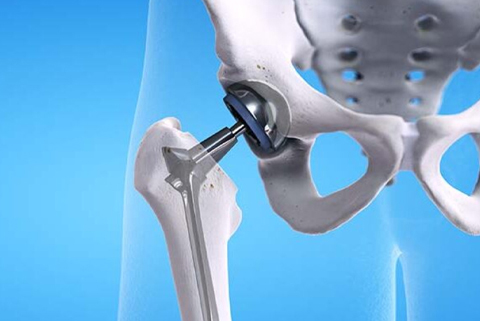
Hip Replacement
Rebuilding Strength After Surgery
by Tim Keeley24 Oct 2026


As featured in The Daily Telegraph, Herald Sun and other News Corp publications around Australia.
A total hip replacement can dramatically reduce pain and improve function for people with advanced hip arthritis, but the operation itself does not automatically restore normal strength, balance or walking control.
Before surgery, many people have already spent months or even years walking differently, reducing their activity levels and gradually losing strength around the hip.
After surgery, the damaged joint surfaces have been replaced, but the muscles around the hip still need to be rebuilt.
The gluteal muscles are particularly important because they help control the pelvis when you walk, stand on one leg and climb stairs.
That is why rehabilitation needs to progress beyond simply allowing the wound to heal and getting you walking around the house.
The aim is to progressively rebuild strength, control and confidence so you can return to normal daily activities and, where appropriate, higher-level exercise.
Why Is Strength Important After a Hip Replacement?
A hip replacement changes the joint, but recovering your overall function depends heavily on the muscles surrounding it.
Weakness may affect how well you can:
- stand up from a chair
- walk without a limp
- control your pelvis when standing on one leg
- go up and down stairs
- walk longer distances
- return to gym, recreational exercise and other activities
Rehabilitation should therefore progressively challenge the muscles around the hip and lower limb rather than stopping once basic walking has returned.
4 Exercises to Rebuild Strength After Hip Replacement
The exact timing and progression of these exercises will depend on your surgery, surgical approach, recovery and the advice of your surgeon and Physiotherapist.
These four exercises demonstrate how rehabilitation can progress from basic functional strength towards better hip control and more demanding everyday movements.
1. Sit-to-Stand
The sit-to-stand is one of the most practical early strengthening exercises because it directly relates to everyday function.
Sit towards the front of a firm chair with your feet comfortably positioned underneath you. Have the surgical leg slightly forward and the non-surgical leg further back so you are in a small split stance.
Lean your trunk slightly forwards and push through both feet to stand up. This position naturally places more load through the surgical leg and helps strengthen it during the standing-up phase.
Try to keep the movement controlled and avoid pushing excessively through your arms if you do not need to.
As strength improves, you can progress by using a lower chair, adding resistance or gradually increasing the load through the operated leg.
|
|
2. Standing Hip Abduction
Hip abduction targets the gluteal muscles that help stabilise the pelvis when you walk and stand on one leg.
Stand upright while holding onto a stable support, with a resistance band around the front of your foot.
Keeping your trunk relatively still, slowly move the operated leg out to the side.
Avoid leaning your body in the opposite direction to create the movement.
Pause briefly, then return the leg slowly.
As strength improves, resistance can be increased with a stronger band or cable.
|
|
3. Bridge
A bridge helps rebuild the gluteal muscles and posterior chain.
Lie on your back with your knees bent and feet on the floor.
Gently brace your trunk, squeeze your glutes and push through your heels to lift your hips away from the floor.
The movement should come from the legs and hips rather than aggressively arching through the lower back.
Pause at the top, then lower slowly.
As recovery progresses, bridges can be made more demanding by adding resistance or progressing towards more advanced variations.
|
|
4. Step-Up
Step-ups are an excellent functional exercise because they combine hip and knee strength with balance and control.
Start with a low step and place the surgical leg on top.
Lean slightly forwards and push through the leg on the step to lift your body up.
Try to keep most of the work through the leg on the step rather than pushing excessively from the back leg.
Once you are standing on the step, maintain control through the hip, knee and pelvis before slowly lowering yourself back down.
As strength improves, the exercise can be progressed by increasing the step height or adding resistance.
|
|
How Should Hip Replacement Exercises Progress?
One of the most important principles of rehabilitation is progressive loading.
An exercise that is appropriate in the first few weeks after surgery should not necessarily remain your main exercise several months later.
As your recovery progresses, exercises can gradually become more challenging by changing:
- the resistance
- the number of repetitions
- the depth or range of movement
- the amount of support you use
- the balance demand
- the complexity of the movement
For many people, later rehabilitation will also include more demanding functional exercises such as squats, lunges, higher step-ups, single-leg strengthening and balance work.
Why Are the Glutes So Important After Hip Replacement?
The gluteal muscles play a major role in controlling the hip and pelvis during everyday activities.
When you take a step and your body weight moves onto one leg, the muscles on the outside of the hip help prevent the pelvis from dropping excessively to the opposite side.
If these muscles remain weak after surgery, you may notice difficulty with single-leg balance, stairs or longer walks, and you may continue to walk with a limp.
That is one reason hip strengthening should remain an important part of rehabilitation even after basic walking has become comfortable.
What About Hip Precautions After Surgery?
Post-operative precautions can vary depending on the surgical approach, the surgeon, the individual procedure and your own medical history.
Some people may temporarily be advised to avoid particular combinations of hip movement, while others may have relatively few restrictions.
The exercises and progressions used in rehabilitation should also be adjusted according to your stage of recovery, strength, pain levels, walking ability and functional goals.
What About Walking After Hip Replacement?
Walking is an important part of recovery, but walking alone does not necessarily provide enough resistance to fully restore the strength lost before and after surgery.
Early on, the focus may simply be on gradually increasing your walking distance and using your prescribed walking aid correctly.
As your strength and confidence improve, the aim is to progressively improve walking quality and reduce unnecessary compensation rather than simply trying to walk further while maintaining a significant limp.
Strength exercises and walking therefore work together rather than one replacing the other.
The Key Message
A hip replacement replaces the damaged joint surfaces, but rehabilitation rebuilds the strength and function around the new joint.
The aim is not simply to get through the first few weeks after surgery.
It is to progressively restore hip strength, pelvic control, balance, walking ability and confidence so you can return to the activities that matter to you.
Start at a level appropriate for your stage of recovery and progressively make your rehabilitation more challenging as your strength and function improve.
Hip Replacement Rehabilitation in Bondi Junction
At Physio Fitness in Bondi Junction, we regularly help people recover after hip replacement and other orthopaedic surgery.
Your rehabilitation should be individualised according to your operation, current strength and mobility, walking ability and the activities you want to return to.
We can assess your progress, identify remaining strength or movement deficits and develop a structured rehabilitation program that progresses as you recover.
Need help with your recovery after hip replacement?
Book an appointment with one of our Physiotherapists at Physio Fitness in Bondi Junction.
About Tim Keeley
Tim Keeley, B.Phty, Cred.MDT, APAM, is the founder and Principal Physiotherapist of Physio Fitness, a sports injury and rehabilitation clinic in Bondi Junction, Sydney.
With more than 27 years of clinical experience and over 20,000 treatments performed, Tim specialises in sports, fitness and post-operative rehabilitation.
He is also the founder of Physio Rehab, an online platform providing structured injury and surgery rehabilitation programs and an extensive Physiotherapy exercise-video library.
Disclaimer: This article provides general information only and is not a substitute for individual medical or Physiotherapy advice. Exercise selection and progression should be tailored to your condition. Stop exercises that worsen your symptoms and seek advice from your treating healthcare professional.
👉 Book your consultation today or call us on (02) 9389 9100 for help with your lower back pain and rehabilitation.

Principal Physiotherapist