Achilles Pain Explained
Why It Happens and What You Can Do About It
by Pamela Wolfe30 Aug 2026
If you've ever experienced pain or stiffness at the back of your ankle, particularly when you first get out of bed or begin exercising, you may be dealing with Achilles tendinopathy.
Achilles pain is one of the most common overuse injuries we see in runners, walkers and active individuals. The good news is that, with appropriate management and rehabilitation, most people can make an excellent recovery and return to the activities they enjoy.
Let's take a closer look at what the Achilles tendon does, why Achilles pain develops and what you can do to help it recover.

What Is the Achilles Tendon?
The Achilles tendon is the thick, strong band of tissue that connects your calf muscles — the gastrocnemius and soleus — to your heel bone.
Every time you walk, run, jump or climb stairs, your Achilles tendon helps store and release energy much like a spring. During running it can be exposed to forces several times your body weight, making it one of the hardest-working tendons in the body.
Because of these high loads, the tendon needs time to adapt. When the load being placed on it repeatedly exceeds its current capacity to recover and adapt, pain can develop.
What Is Achilles Tendinopathy?
At a physiological level, tendinopathy can develop when the load placed on a tendon repeatedly exceeds its ability to adapt and recover.
Healthy tendons are made up mainly of strong collagen fibres organised to efficiently transfer force. With repeated overload, the tendon can respond with changes in cellular activity and its extracellular matrix. If this overload continues, the normally organised collagen structure may become less organised, while the tendon can also increase in thickness and develop other structural changes.
Importantly, this does not mean the tendon is permanently damaged.
Tendon structure and function can change in response to loading. Progressive strengthening helps improve the tendon and calf complex's capacity to tolerate the forces required for walking, running and sport.
Although the term “tendonitis” is still commonly used, persistent Achilles tendinopathy is not simply an inflammatory condition.
It is more useful to think about Achilles tendinopathy as a problem involving the relationship between the load being placed on the tendon and its current capacity to tolerate that load.
What Causes Achilles Pain?
Achilles tendinopathy usually develops gradually rather than from one specific injury.
Common contributing factors can include:
- Increasing running distance or speed too quickly
- Returning to exercise after time off
- Starting or significantly increasing hill training
- Sudden increases in walking or hiking
- Reduced calf strength or endurance
- Limited ankle mobility in some individuals
- Inadequate recovery between training sessions
- Changing footwear or training surfaces without allowing enough time to adapt
Sometimes there isn't one single cause. Instead, several relatively small changes can combine to increase the load on the tendon beyond what it is currently conditioned to tolerate.

Common Symptoms of Achilles Tendinopathy
Achilles tendinopathy commonly presents with:
- Pain at the back of the heel or slightly above it
- Morning stiffness during your first few steps
- Pain at the beginning of a run or walk that may improve as you warm up
- Symptoms that return later in the day or following exercise
- Tenderness when pressing or squeezing the tendon
- Thickening of the tendon in longer-standing cases
Many people notice that their symptoms appear or become worse following an increase or change in their usual activity or training.
Should You Stop Exercising?
Not necessarily.
Complete rest is generally not the best long-term solution for Achilles tendinopathy. Prolonged unloading can contribute to further deconditioning and reduce the tendon and calf complex's capacity to tolerate activity.
Instead, the goal is usually to modify your activity so that the tendon continues to receive an appropriate amount of load without repeatedly aggravating symptoms.
Depending on the individual, this may involve:
- Temporarily reducing running distance
- Reducing or temporarily avoiding hills and speed sessions
- Cross-training with activities such as cycling or swimming
- Allowing adequate recovery between harder loading sessions
If you are unsure what training you can safely continue, discuss this with your Physiotherapist. They can provide guidance on the type, volume and intensity of exercise that is appropriate for your individual presentation.
Monitor How the Tendon Responds
It is useful to monitor symptoms during exercise and, importantly, how the tendon feels later that day and the following morning.
Mild discomfort can sometimes be acceptable during rehabilitation, depending on the individual and stage of recovery. If symptoms are clearly escalating or the tendon is significantly worse the following day, the amount or intensity of loading may need to be adjusted.
Why Strengthening Is the Key to Recovery
Progressive tendon loading is the cornerstone of rehabilitation for Achilles tendinopathy.
Recovery isn't simply about making the pain disappear. The longer-term goal is to improve the capacity of the calf muscles and Achilles tendon to tolerate the loads you need for walking, running, jumping or sport.
Depending on your symptoms and stage of rehabilitation, your Physiotherapist may prescribe:
- Double-leg calf raises
- Single-leg calf raises
- Bent-knee calf raises to increase the contribution of the soleus
- Heavy slow resistance exercises
- Isometric calf-loading exercises
- Plyometric and energy-storage exercises as you progress towards running or sport
Below are three of my favourite exercises that may form part of an Achilles tendon rehabilitation program.
3 Achilles Tendon Rehabilitation Exercises
1. Single-Leg Isometric Calf Raise on a Step
|
|
This exercise can be performed initially using body weight and progressed by adding external load, such as a kettlebell, as your strength and tolerance improve.
Suggested dosage: 3 × 30-second holds.
Perform variations with both a straight knee and bent knee to challenge the calf complex differently.
2. Eccentric Calf Raise on a Step
|
|
Eccentric calf raises focus on controlling the lowering phase of the movement and can be progressed by increasing resistance as your capacity improves.
Suggested dosage: 6 × 6 repetitions.
Again, straight-knee and bent-knee variations can be used depending on your individual program.
3. Double-Leg Pogos
Pogos introduce faster, spring-like loading through the calf and Achilles tendon and are more appropriate later in rehabilitation once sufficient strength and load tolerance have been developed.
Suggested dosage: 3 × 30 seconds.
Important: These exercises are examples rather than a complete rehabilitation program. The appropriate exercise, resistance, range and progression depend on the location and irritability of your symptoms, your current strength and the activities you are aiming to return to.
What About Stretching?
Stretching can be useful when calf or ankle mobility is limited, but it is not the primary treatment for Achilles tendinopathy.
Aggressive stretching of an irritable Achilles tendon can sometimes increase symptoms, particularly depending on where the pain is located.
Your Physiotherapist can determine whether stretching is appropriate for you and how it should fit into your overall rehabilitation program.
Do Shoes Matter?
Footwear can influence the load and irritation experienced around the Achilles tendon.
Some people find that shoes with a slightly higher heel-to-toe drop are more comfortable because they can reduce the amount of ankle dorsiflexion required during activity. Others may notice increased symptoms if they move into minimalist or lower-drop footwear too quickly without allowing sufficient adaptation time.
Footwear can also irritate the area directly. A firm or poorly fitting heel counter may rub against the Achilles region and contribute to local pain.
There is no single “perfect” shoe for everyone. The best option depends on your foot, activity, symptoms and current stage of recovery.
If you're unsure, your Physiotherapist can help determine whether footwear is contributing to your symptoms.
When Should You Seek Help?
It is a good idea to see a Physiotherapist if:
- Pain has lasted more than a couple of weeks or is getting progressively worse
- Morning stiffness is becoming more pronounced
- Pain is preventing you from running or exercising normally
- You notice significant swelling or thickening around the tendon
- Your symptoms repeatedly return whenever you increase activity
If you feel a sudden “pop” in the Achilles, develop sudden severe pain or have difficulty pushing off the foot or rising onto your toes, seek prompt medical assessment as this may indicate an Achilles tendon rupture.
Getting the problem assessed early can also help establish an appropriate loading plan before symptoms become more persistent.
The Bottom Line
Achilles tendinopathy is commonly related to a mismatch between the demands being placed on the tendon and its current capacity to tolerate those demands.
The answer is usually neither to simply “push through” escalating pain nor to completely rest the tendon for prolonged periods.
Effective rehabilitation usually combines sensible load management, progressive calf and tendon strengthening and a gradual return to the activities you want to perform.
If your Achilles pain isn't improving, a Physiotherapist can assess the factors contributing to your symptoms and develop an individualised rehabilitation program based on your strength, activity and goals.
About Pamela Wolfe
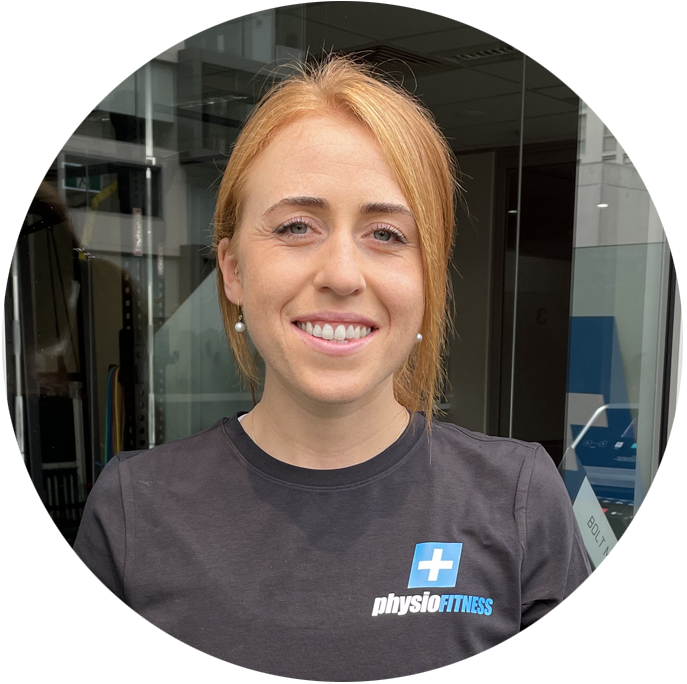
Pamela Wolfe is a Senior Physiotherapist at Physio Fitness in Bondi Junction, Sydney.
Pamela treats a broad range of sports, running and musculoskeletal injuries and helps patients progress from pain and injury through structured rehabilitation and back to the activities they enjoy.
References
- Chimenti RL, Neville C, Houck J, et al. Achilles Pain, Stiffness, and Muscle Power Deficits: Midportion Achilles Tendinopathy: Revision 2024. Journal of Orthopaedic & Sports Physical Therapy.
- de Vos RJ, et al. Dutch multidisciplinary guideline on Achilles tendinopathy. British Journal of Sports Medicine. 2021.
- Cook JL, Rio E, Purdam CR, Docking SI. Revisiting the continuum model of tendon pathology. 2016.
- Malliaras P, Barton CJ, Reeves ND, Langberg H. Loading programmes for Achilles tendinopathy. 2013.
- van der Vlist AC, et al. Living systematic review of treatments for Achilles tendinopathy. 2021.
- Scott A, et al. ICON consensus: Clinical terminology for tendinopathy. 2020.
- Docking SI, Cook JL. Pathological tendons maintain sufficient aligned fibrillar structure on ultrasound tissue characterization. Scandinavian Journal of Medicine & Science in Sports. 2016;26(6):675–683.
Disclaimer: This article provides general information only and is not a substitute for individual medical or Physiotherapy advice. Exercise selection and loading should be adjusted to your individual symptoms and stage of rehabilitation. Seek prompt medical assessment if you experience sudden severe Achilles pain, a popping sensation or significant loss of push-off strength.
👉 Book your consultation today or call us on (02) 9389 9100 to start your recovery.
Senior Physiotherapist