
The 3 Pillars of Ankle Sprain Rehab
Why Regaining Mobility, Strength, and Stability After an Ankle Sprain Is Essential
by Pamela Wolfe15 Dec 2025
Lateral ankle sprains are among the most common musculoskeletal injuries in both sport and everyday life. While sprains vary in severity—from mild stretching of the ligaments to complete ruptures—the majority can be managed conservatively with appropriate rehabilitation. In some cases, however, severe injuries may require surgical intervention.
Ankle sprains typically occur when the joint is forced into excessive inversion or eversion, placing stress on the surrounding ligaments. Depending on the force and mechanism of injury, anything from mild ligament strain to partial tearing, complete rupture, osteochondral damage to the talus, or even peroneal tendon injuries can occur. These associated injuries can complicate recovery and prolong rehabilitation.
What Happens Immediately After an Ankle Sprain?
The first response is pain and swelling, which are part of the body’s natural healing process. Managing swelling during the acute and sub-acute phases is important. If we do not manage the swelling, it can have many negative effects on our ankle, such as tightness, discomfort and poor muscle activation.
Regardless of severity of injury, most people experience some degree of loss of mobility, strength, and stability following an ankle sprain. Without proper rehabilitation, these deficits can persist long term.

Chronic Ankle Instability: A Common Long-Term Outcome
Research shows that around 40% of people who sustain an ankle sprain go on to develop chronic ankle instability (CAI)—a condition characterised by recurrent sprains, persistent “giving way,” pain, and reduced function. This commonly develops when key deficits such as mobility, strength, and proprioception are not fully restored.
This is why early assessment and a tailored rehab plan are crucial. Understanding the mechanism of injury helps ensure that the right structures are treated and that healing, recovery, and return to activity are optimised. If rehabilitation is incomplete, the ankle can remain stiff, weak, and unstable, significantly increasing the risk of CAI and future injuries.
As you progress through recovery and plan a return to running or sport, there are three essential pillars of rehab:
Ankle Mobility
Strength (particularly calf and peroneals)
Stability and Proprioception
1. Ankle Mobility
Loss of ankle dorsiflexion (the ability to bend the ankle upward) is extremely common after a sprain. This decrease can be caused by:
Joint swelling
Protective muscle guarding
Ligament injury and scar tissue
Tightness in the joint capsule
Even a small reduction in dorsiflexion—sometimes as little as 10–20%—can significantly affect running and athletic performance. Chronic stiffness can also cause the back of the ankle joint capsule to tighten, making movement increasingly restricted.
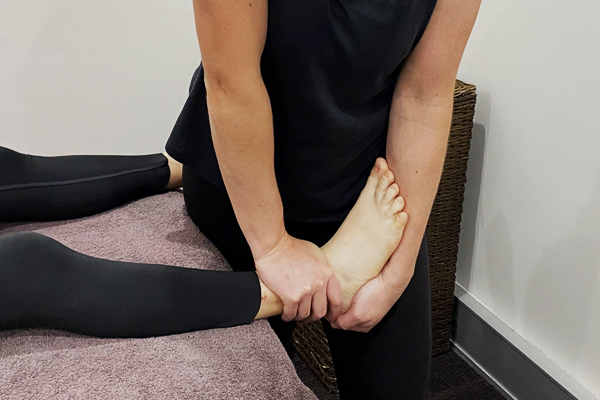
In physiotherapy, restoring dorsiflexion is a primary focus early and throughout the rehab process. Improving this range:
Reduces stiffness
Restores normal walking and running mechanics
Prevents recurrent pain
Reduces the risk of future sprain
Banded ankle dorsiflexion mobilisation
Calf rolling (soft tissue release)
Focus on control and slow, steady activation.
2. Calf & Peroneal Strength Along with reduced mobility, it’s very common to lose significant strength after a sprain—especially in the calf muscles and the peroneals (which help control inversion/eversion).
This weakness develops because of:
Pain inhibition & swelling reducing muscle activation
Reduced loading or immobilisation, leading to deconditioning
Damage to proprioceptive nerve endings in ligaments, impairing muscle firing
Regaining this strength is essential to restore power, support the ankle joint, and ensure safe return to running and sport. If the calf and peroneals aren’t adequately strengthened, secondary injuries—such as Achilles tendinopathy—are more likely to develop.
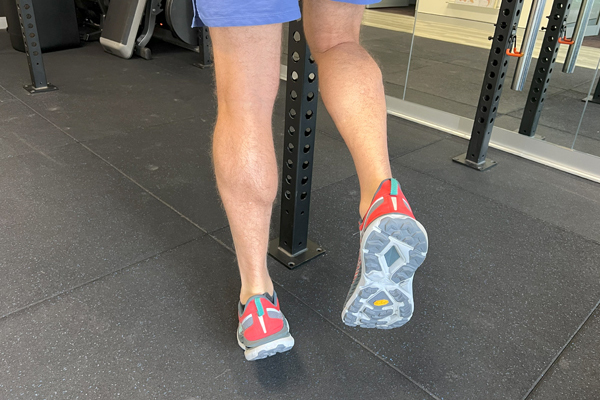
Your physiotherapist will assess your muscle capacity and create an individualised strengthening program.
Common strengthening exercises include:
Eccentric calf raises off a step
Banded eversion for peroneal strengthening
3. Stability & Proprioception The third pillar—and arguably the most important—is rebuilding ankle stability.
Our ankle relies on two forms of stability:
Passive stability from the ligaments
Active stability from muscles and the nervous system
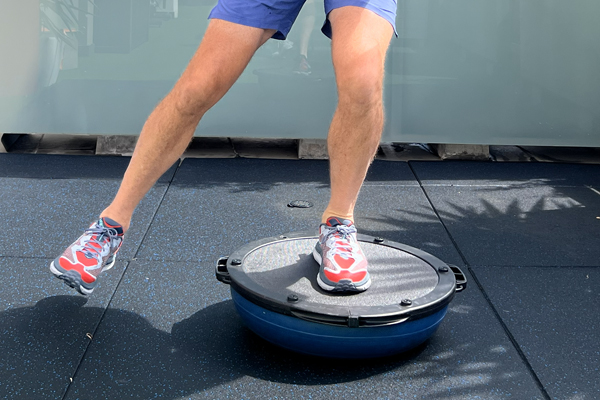
After a sprain, both can be compromised. If ligament damage reduces passive stability, we must enhance the active component through neuromuscular training.
Poor stability can lead to:
Recurrent sprains
Persistent “giving way”
Long-term chronic ankle instability
To restore stability, the brain and nervous system must relearn how to control the ankle in dynamic, unpredictable environments.
Effective stability exercises include:
Single-leg balance on a wobble cushion or BOSU
Compass exercise (multi-directional reach)
These drills retrain proprioception, challenge balance, and help the ankle respond reactively—just like it needs to during sport.
Final Thoughts
Ankle sprains are common, but they should never be ignored. With the right rehabilitation, the vast majority of people make a full recovery and return confidently to running, exercise, and sport. The key is addressing the three essential pillars:
Mobility
Strength
Stability
When these areas are properly restored, you significantly reduce the risk of long-term issues like chronic ankle instability—and ensure your ankle feels strong, stable, and ready for whatever you want to do.
References:
Miklovic, T. M., Donovan, L., Protzuk, O. A., Kang, M. S., & Feger, M. A. (2018). Acute lateral ankle sprain to chronic ankle instability: a pathway of dysfunction. The Physician and Sportsmedicine, 46(1), 116–122.
Bergman R, Shuman VL. Acute Ankle Sprain. [Updated 2025 Aug 2]. In: StatPearls [Internet]. Treasure Island (FL): StatPearls Publishing; 2025 Jan
Doherty C, Delahunt E, Caulfield B, Hertel J, Ryan J, Bleakley C. The incidence and prevalence of ankle sprain injury: a systematic review and meta-analysis of prospective epidemiological studies. Sports Med. 2014 Jan;44(1):123-40.
Physical Therapy After an Ankle Sprain: Using the Evidence to Guide Physical Therapist Practice. Journal of Orthopaedic & Sports Physical Therapy 2021 51:4, 159-160
Still in pain? We can help.
If your ankle sprain isn't getting better, see our experienced Physiotherapists at Physio Fitness Bondi Junction.
👉 Book your consultation today or call us on (02) 9389 9100 to start your recovery.

Ankle sprains typically occur when the joint is forced into excessive inversion or eversion, placing stress on the surrounding ligaments. Depending on the force and mechanism of injury, anything from mild ligament strain to partial tearing, complete rupture, osteochondral damage to the talus, or even peroneal tendon injuries can occur. These associated injuries can complicate recovery and prolong rehabilitation.
What Happens Immediately After an Ankle Sprain?
The first response is pain and swelling, which are part of the body’s natural healing process. Managing swelling during the acute and sub-acute phases is important. If we do not manage the swelling, it can have many negative effects on our ankle, such as tightness, discomfort and poor muscle activation.
Regardless of severity of injury, most people experience some degree of loss of mobility, strength, and stability following an ankle sprain. Without proper rehabilitation, these deficits can persist long term.
Chronic Ankle Instability: A Common Long-Term Outcome
Research shows that around 40% of people who sustain an ankle sprain go on to develop chronic ankle instability (CAI)—a condition characterised by recurrent sprains, persistent “giving way,” pain, and reduced function. This commonly develops when key deficits such as mobility, strength, and proprioception are not fully restored.
This is why early assessment and a tailored rehab plan are crucial. Understanding the mechanism of injury helps ensure that the right structures are treated and that healing, recovery, and return to activity are optimised. If rehabilitation is incomplete, the ankle can remain stiff, weak, and unstable, significantly increasing the risk of CAI and future injuries.
As you progress through recovery and plan a return to running or sport, there are three essential pillars of rehab:
1. Ankle Mobility
Loss of ankle dorsiflexion (the ability to bend the ankle upward) is extremely common after a sprain. This decrease can be caused by:
Common exercises to restore ankle mobility include:
2. Calf & Peroneal Strength Along with reduced mobility, it’s very common to lose significant strength after a sprain—especially in the calf muscles and the peroneals (which help control inversion/eversion).
This weakness develops because of:
Your physiotherapist will assess your muscle capacity and create an individualised strengthening program.
Common strengthening exercises include:
3. Stability & Proprioception The third pillar—and arguably the most important—is rebuilding ankle stability.
Our ankle relies on two forms of stability:
Poor stability can lead to:
Effective stability exercises include:
Final Thoughts
Ankle sprains are common, but they should never be ignored. With the right rehabilitation, the vast majority of people make a full recovery and return confidently to running, exercise, and sport. The key is addressing the three essential pillars:
References:
Miklovic, T. M., Donovan, L., Protzuk, O. A., Kang, M. S., & Feger, M. A. (2018). Acute lateral ankle sprain to chronic ankle instability: a pathway of dysfunction. The Physician and Sportsmedicine, 46(1), 116–122.
Bergman R, Shuman VL. Acute Ankle Sprain. [Updated 2025 Aug 2]. In: StatPearls [Internet]. Treasure Island (FL): StatPearls Publishing; 2025 Jan
Doherty C, Delahunt E, Caulfield B, Hertel J, Ryan J, Bleakley C. The incidence and prevalence of ankle sprain injury: a systematic review and meta-analysis of prospective epidemiological studies. Sports Med. 2014 Jan;44(1):123-40.
Physical Therapy After an Ankle Sprain: Using the Evidence to Guide Physical Therapist Practice. Journal of Orthopaedic & Sports Physical Therapy 2021 51:4, 159-160
Still in pain? We can help.
If your ankle sprain isn't getting better, see our experienced Physiotherapists at Physio Fitness Bondi Junction.
👉 Book your consultation today or call us on (02) 9389 9100 to start your recovery.
B.Sc.(Hons) Physio, B.Sc.HPS, APAM
Senior Physiotherapist
Senior Physiotherapist